A cash book is the simplest and most important record in any business: every rupee that comes in and goes out, in date order. Get it right and you always know how much cash you really have. This guide explains the standard cash book format, a daily routine that works, and how digital tools remove the arithmetic.
What Is A Cash Book?
A cash book records all cash receipts and cash payments. It acts as both a journal and a ledger for cash, so the closing balance should match the cash physically in your drawer or safe. A double-column cash book adds a bank column for cheques and transfers; a triple-column version adds discount columns as well.
Standard Cash Book Format
The traditional layout uses two sides - receipts on the left (debit) and payments on the right (credit):
| Date | Particulars | Receipt (Rs) | Date | Particulars | Payment (Rs) |
|---|---|---|---|---|---|
| 01 Oct | Opening balance | 50,000 | 01 Oct | Shop rent | 25,000 |
| 01 Oct | Cash sales | 38,500 | 01 Oct | Transport | 1,800 |
| 01 Oct | Received from Customer A | 20,000 | 01 Oct | Supplier payment | 40,000 |
| Closing balance carried down | 41,700 |
Receipts total Rs 1,08,500 and payments Rs 66,800, so the closing cash is Rs 41,700. That closing figure becomes tomorrow's opening balance.
A Daily Routine That Keeps Cash Honest
- Morning: count the drawer and confirm it matches yesterday's closing balance.
- During the day: record every receipt and payment as it happens - not at night from memory.
- Evening: total both sides, calculate the closing balance and count the cash again.
- If it does not match: find the difference today. A small gap found today is easy; a gap found next month is not.
Common Cash-Handling Mistakes
- Mixing personal and business money.
- Paying small expenses from the drawer without a note.
- Recording payments received from customers only in the customer's account and not in the cash record.
- Rounding amounts "to keep it simple".
Cash Book Vs Customer Ledger
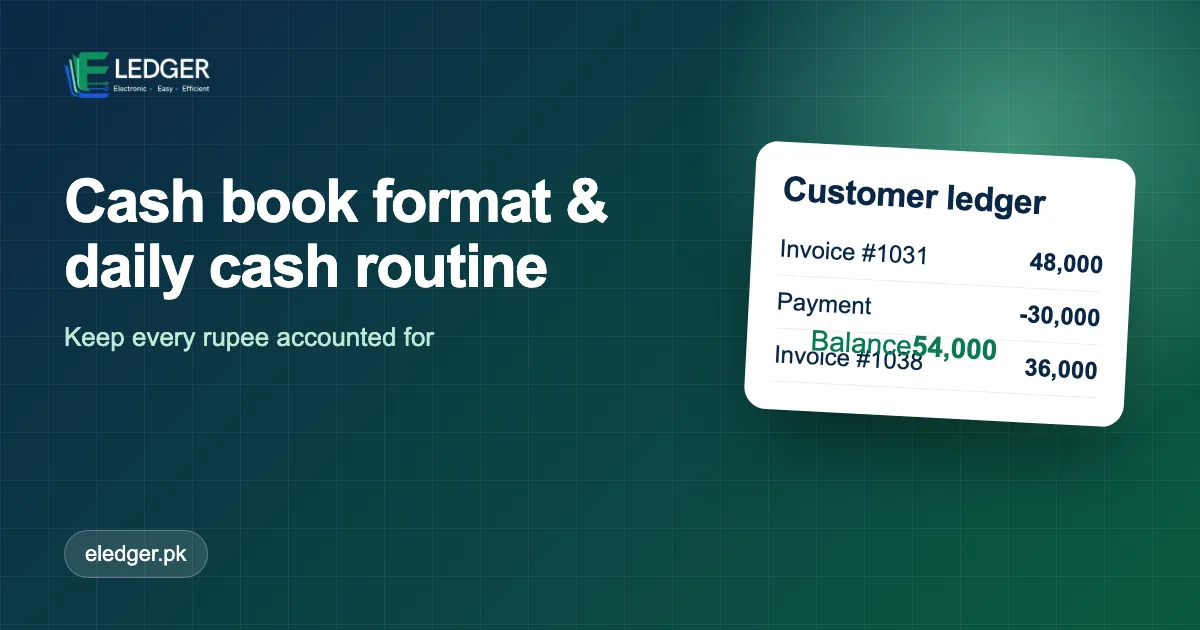
The cash book shows money moving. The ledger shows who owes what. A payment from a customer appears in both: as a receipt in the cash book and as a credit in that customer's account. Software keeps them in sync so you enter it once.
Going Digital
A digital system calculates running balances for you, lets you filter by date and keeps a clear trail of who recorded each entry. You can still print a cash summary for any day or month for your accountant.
Frequently Asked Questions
What is a cash book?
A cash book records all cash receipts and payments in date order. Its closing balance should match the cash physically in your drawer or safe.
What is the difference between a single, double and triple column cash book?
A single-column cash book records cash only, a double-column adds a bank column, and a triple-column also records discounts.